
What Actually Determines the Cost of a Stretch Ceiling in India
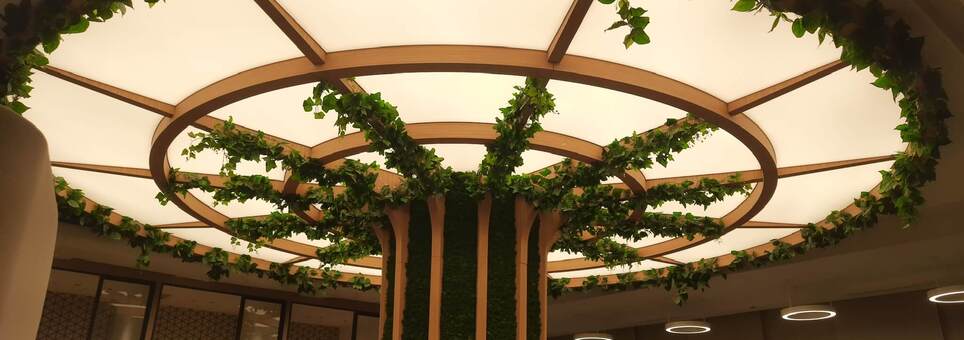
If you’ve asked for a ballpark figure and gotten a list of questions back instead of a number, this is why.
Unlike a conventional false ceiling, a stretch ceiling isn’t a stock item bought off a rate card. It’s a custom system — built to your room, your finish, your lighting, and your performance requirements. Two installations that look similar in a photo can sit at very different price points once you account for what’s actually behind the surface. So instead of a number that would be wrong for your project, here’s what genuinely sets the price.
1. The Type of Stretch Ceiling
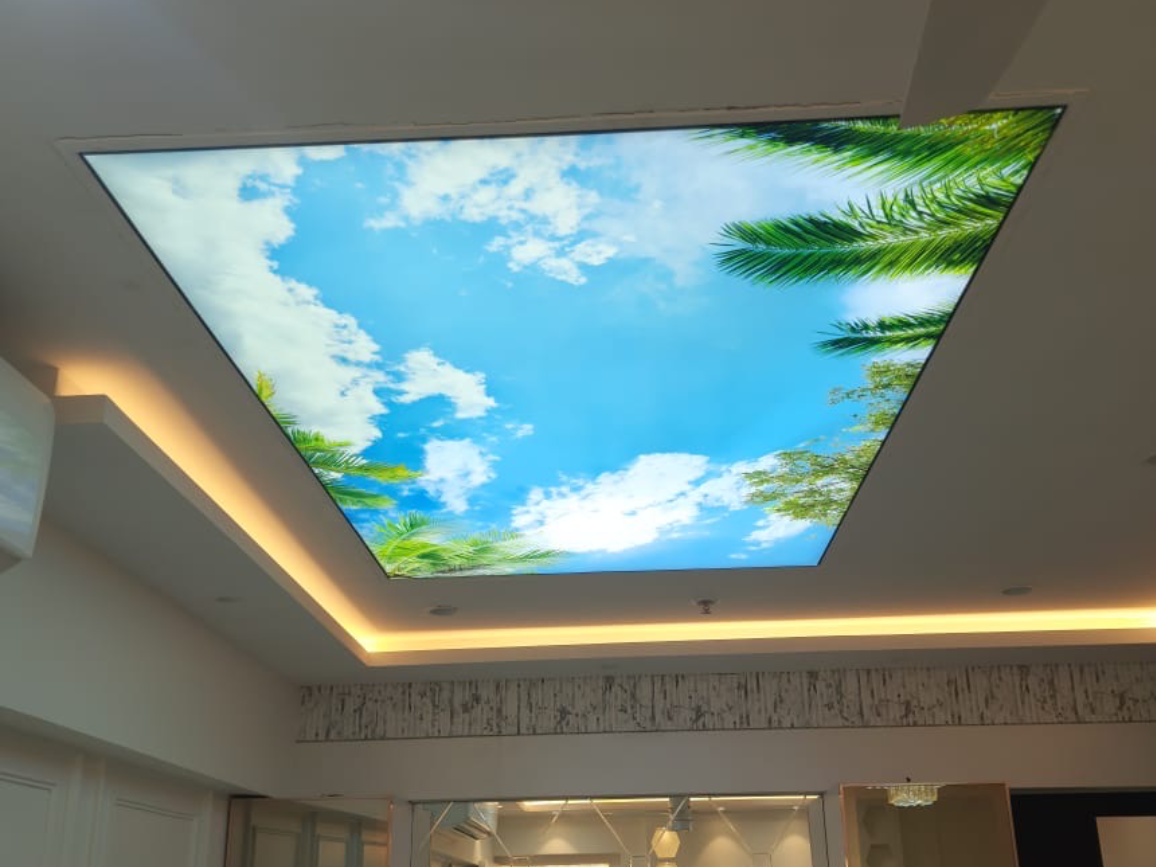
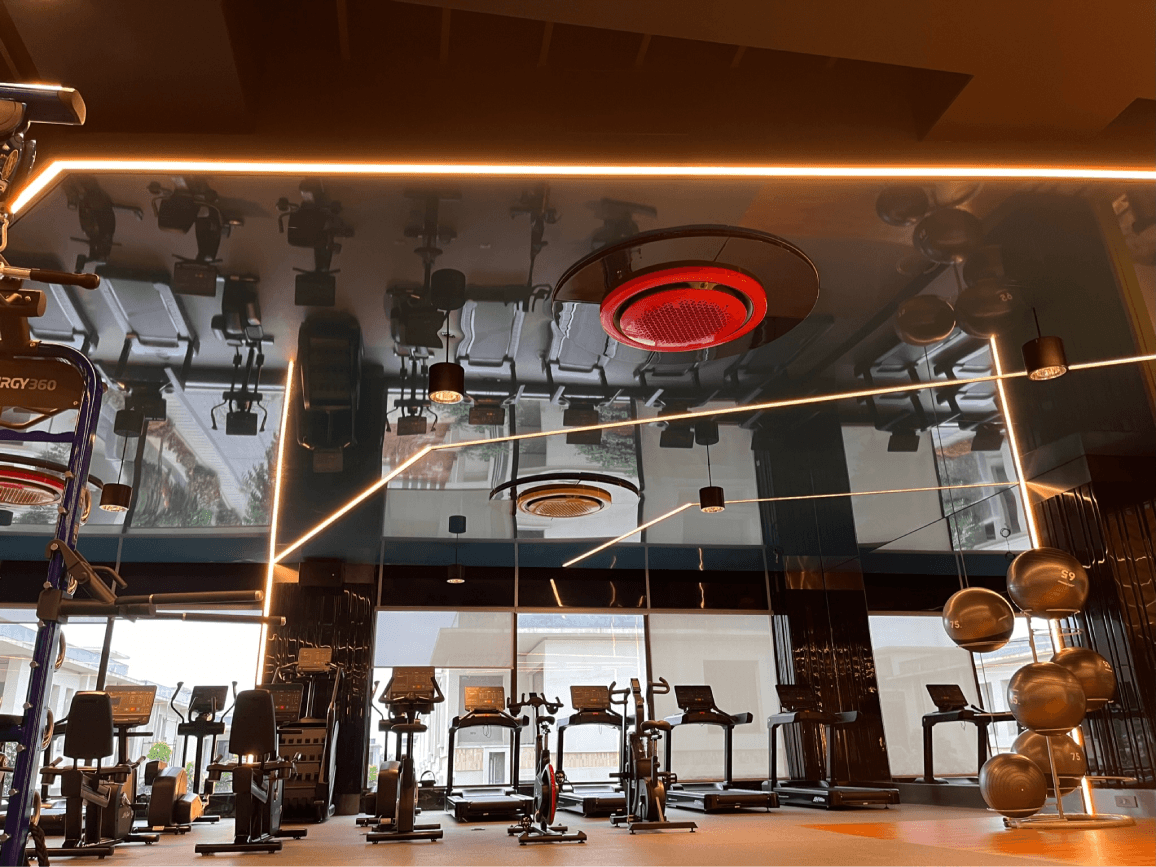
Printed, plain opaque, translucent, and lacquer finishes are different products with different material and processing costs. A plain opaque matte finish is the simplest starting point. Translucent membranes are built for backlighting and carry a different material spec. A high-resolution printed graphic and a high-gloss lacquer surface both involve additional processing. The rate reflects the finish, not just the square footage.
2. Size and Shape of the Ceiling
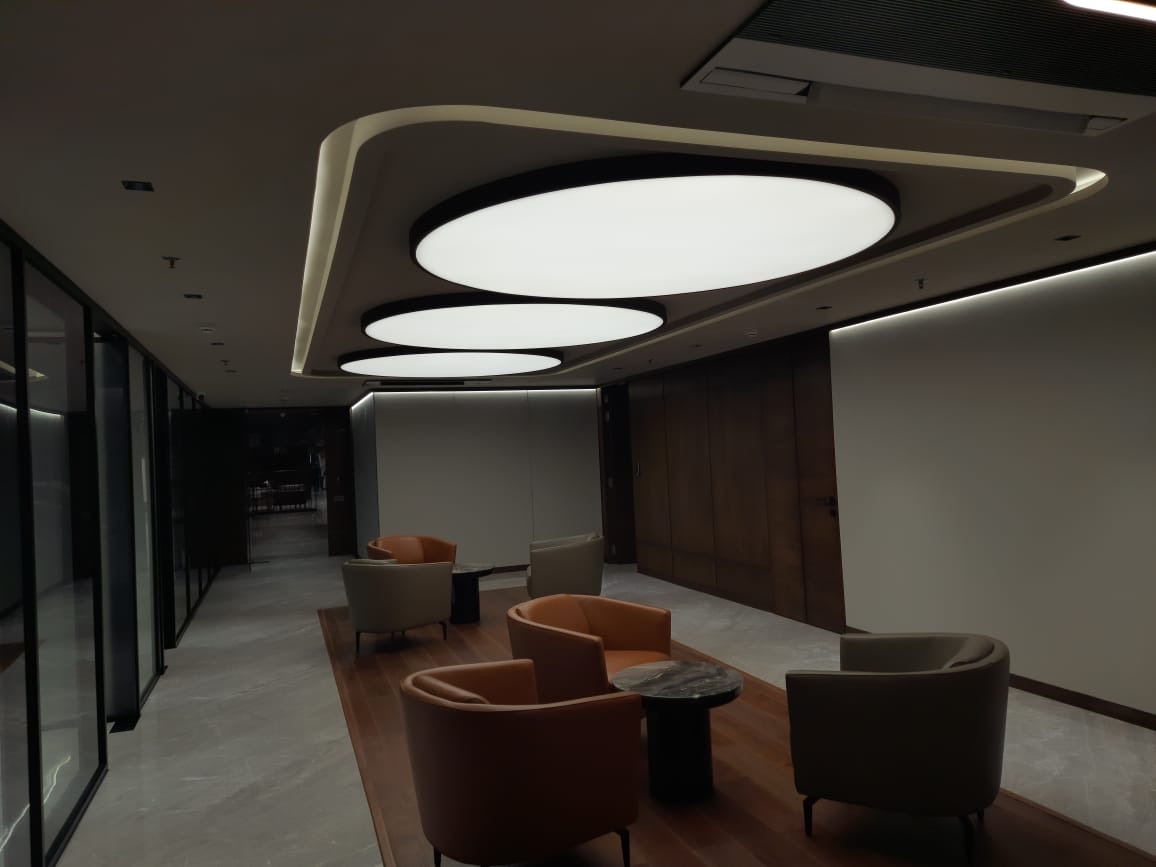
The rate per square foot isn’t fixed — it moves with geometry. A large, simple rectangular span is more efficient to fabricate and install than a small room, and typically carries a lower per sq ft rate. The rate per square foot climbs with:
- Curved or circular layouts
- Multiple ceiling levels or panels
- Complex geometric designs
- 3D forms
Each of these needs more design time, more precision in fabrication, and more installation care — all before the area itself is factored in.
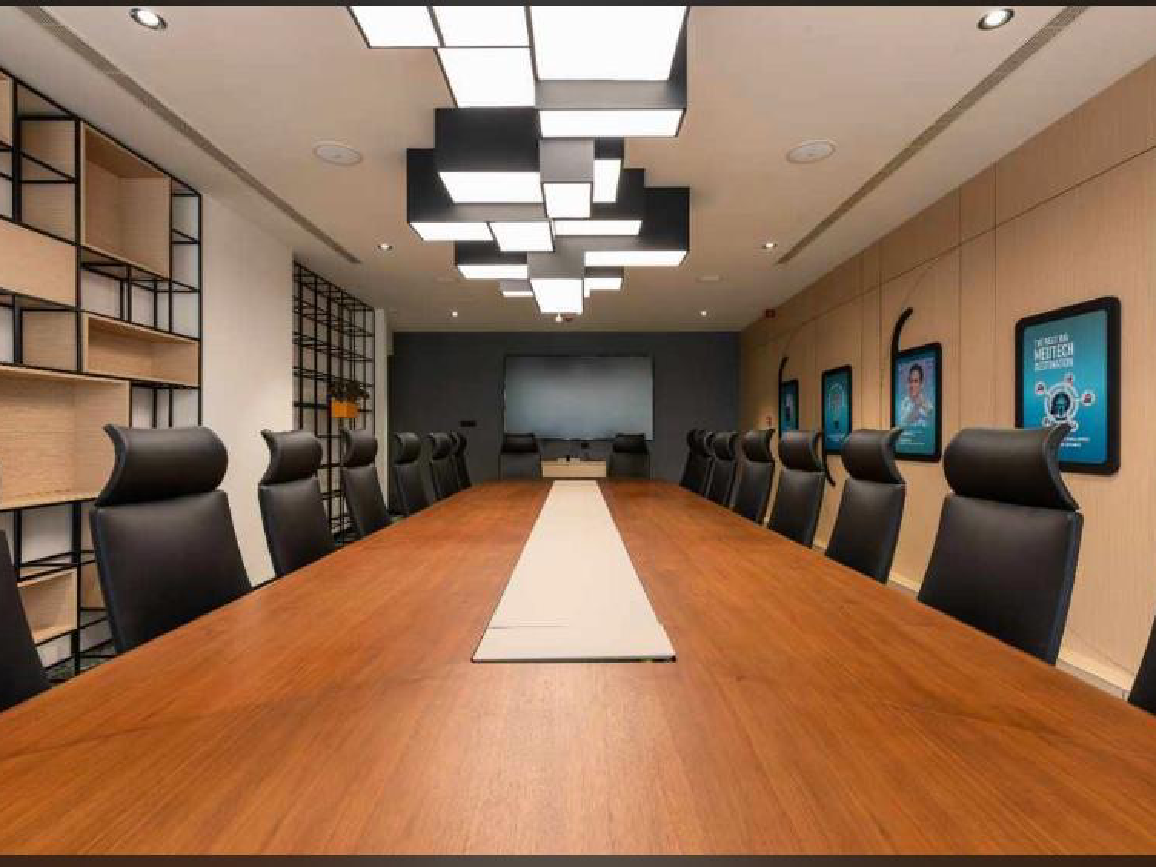
3. LED Configuration
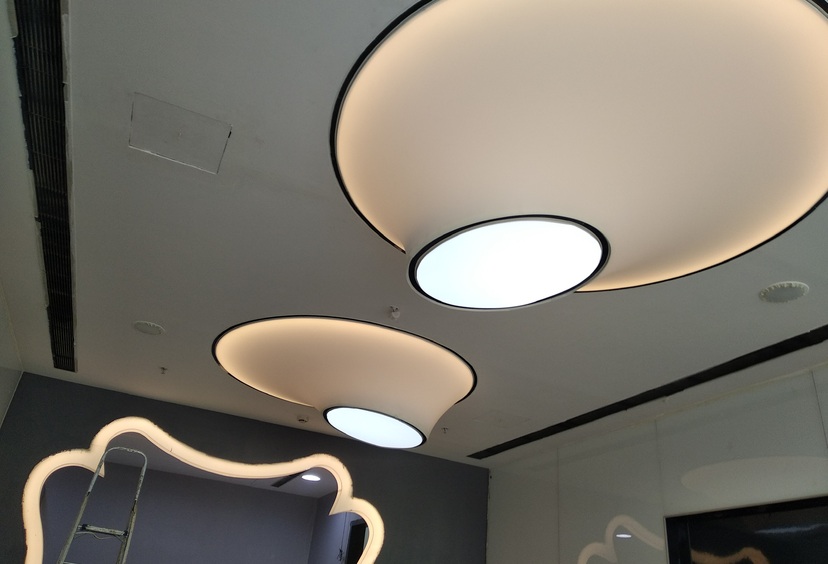
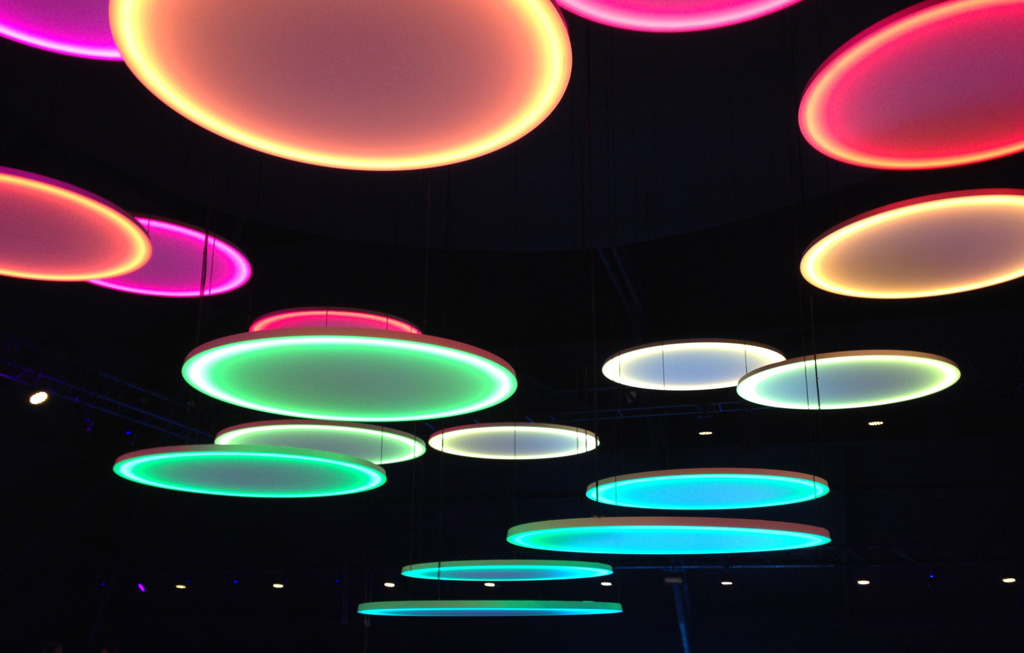
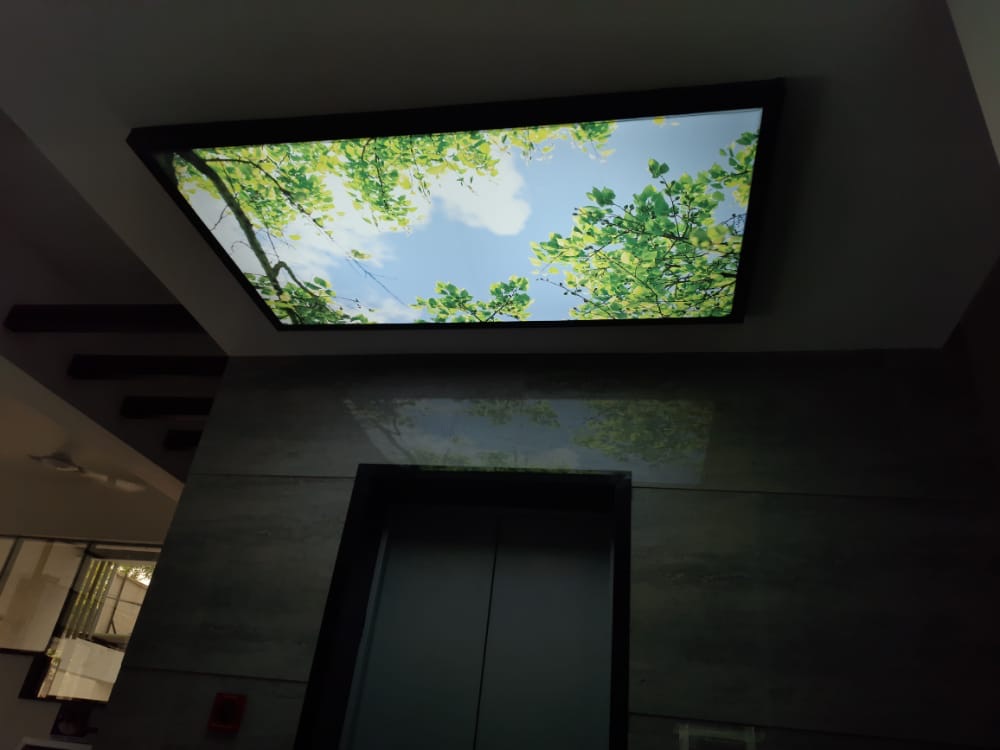
A simple on/off backlit system costs less than one built around automation. The cost rises as the lighting brief adds:
- Dimming
- Tunable white (adjustable colour temperature through the day)
- RGB colour-changing light
- DMX control
- Smart home or building automation integration
Each of these adds electronics, a control system, and programming time. This is a lighting decision as much as a ceiling decision — decide how the space needs to behave, not just how it should look on day one.
4. LED Quality
Not all LED systems are built the same, even when they look identical switched on. Certified, professional-grade drivers and LED modules cost more up front, but they consume less power over the life of the installation and hold their output and colour consistency for years. Trade-grade components cost less initially but draw more power, degrade faster, and are more likely to need replacement or produce visible inconsistency in the light over time. This is a running-cost decision, not just a purchase-price one.
5. Cavity Depth, for Backlit Systems
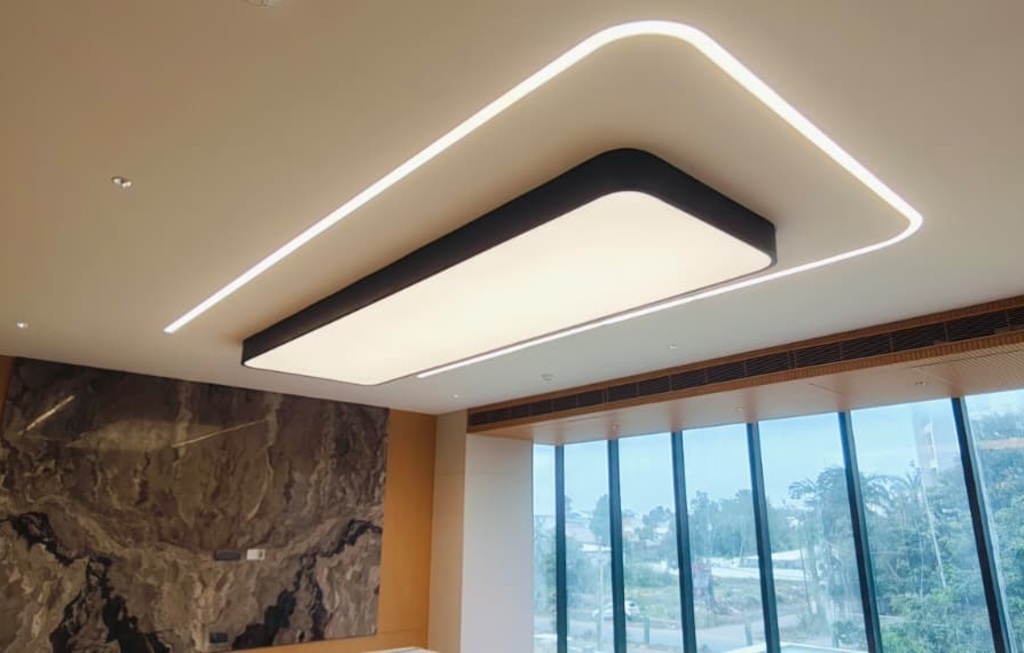
If your ceiling is backlit, the depth of the cavity behind the membrane changes how much hardware it takes to light it evenly. A shallow cavity gives the light a shorter throw to spread before it reaches the membrane, so more LED modules — and more drivers to run them — are needed to avoid hotspots and dark patches. A deeper cavity lets the light diffuse further, so fewer modules achieve the same uniform glow. Less depth to work with means more LEDs and drivers to hit the same result, and that raises the cost.
6. Acoustic Configuration
If sound control matters in your space, NEWMAT offers acoustic configurations ranging from NRC 0.45 up to NRC 0.9. The higher the acoustic performance required, the more the membrane construction and cavity design need to do — and the cost moves with it. Tell us what the space needs to feel like acoustically (a quiet boardroom, a controlled gym, an auditorium), and the right NRC target follows from that.
7. Dust Barrier
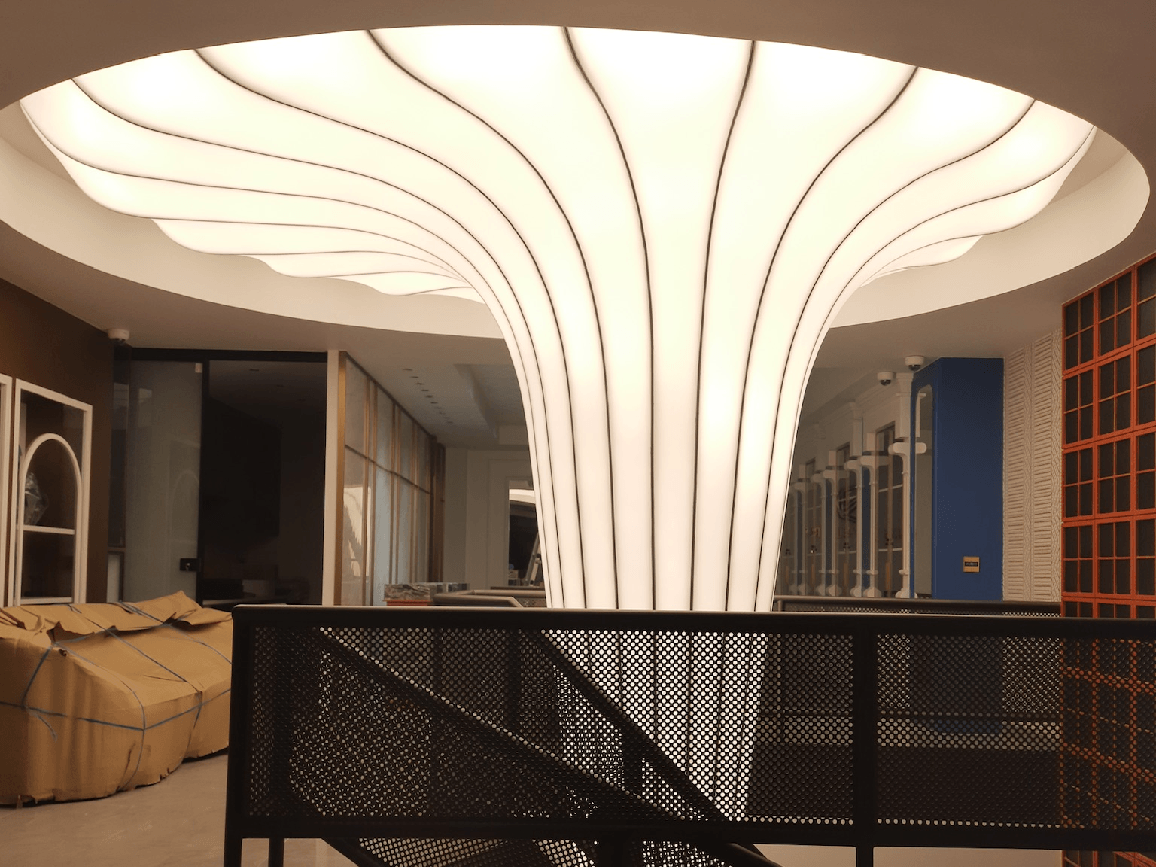
A dust barrier is what keeps a stretch ceiling maintenance-free for years, instead of needing to be opened up and cleaned out eventually. NEWMAT has installed multiple double-layer ceilings for clients who wanted zero ingress of dust or insects into the ceiling void — common in healthcare, F&B, and clean environments. It’s an additional layer of material and installation work, so it adds to the cost, but it removes a maintenance problem for the life of the ceiling.
8. Does Project Location Affect the Price?
Yes. Site location affects logistics, travel, and installation timelines. Beyond materials and design, on-site conditions factor into the final cost of any project. Projects in metropolitan areas are generally straightforward to execute; remote sites or locations with restricted access may need additional planning and resources, which show up in the quote.
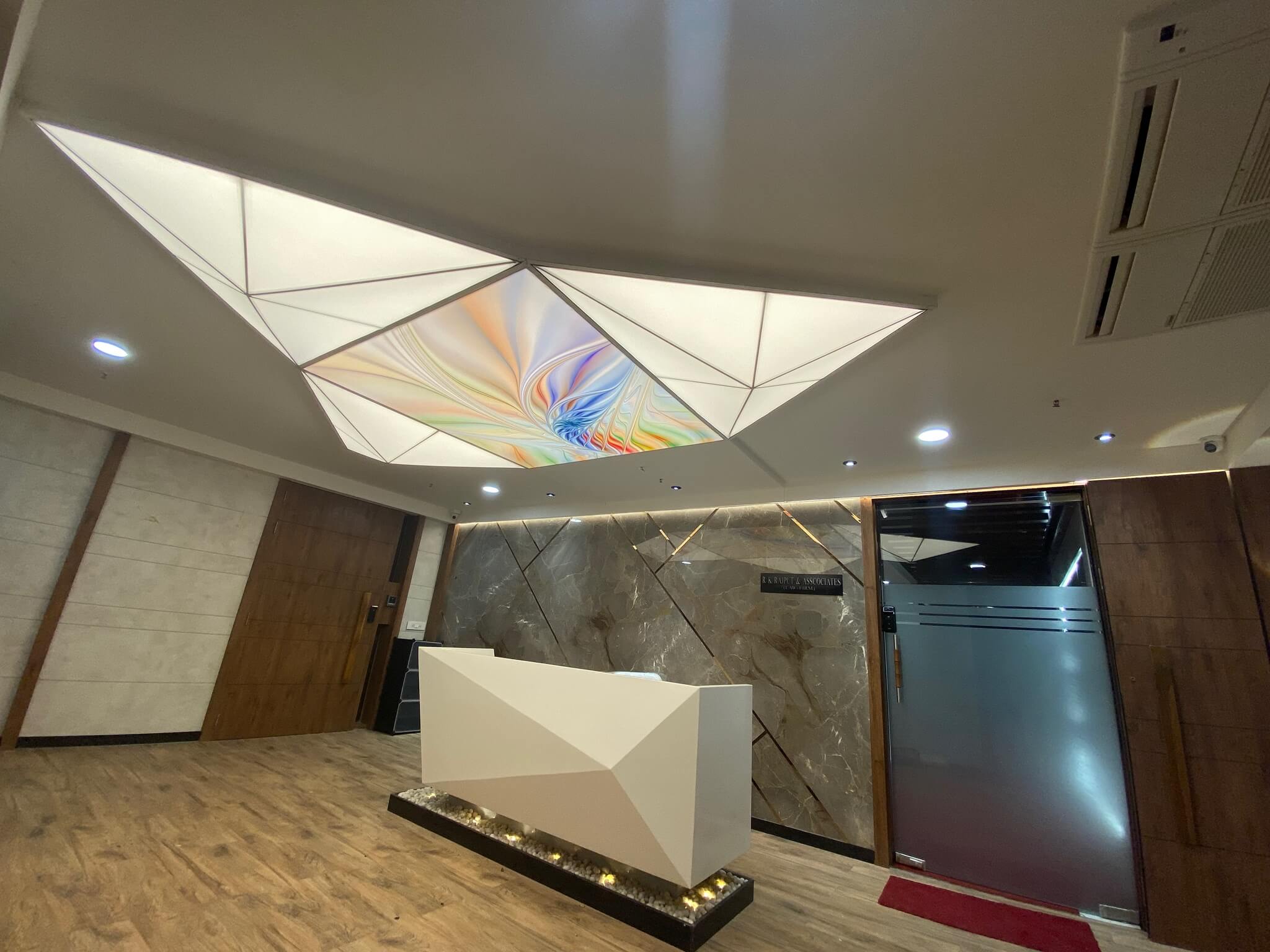
Why Doesn’t a Stretch Ceiling Have a Fixed Rate Per Square Foot?
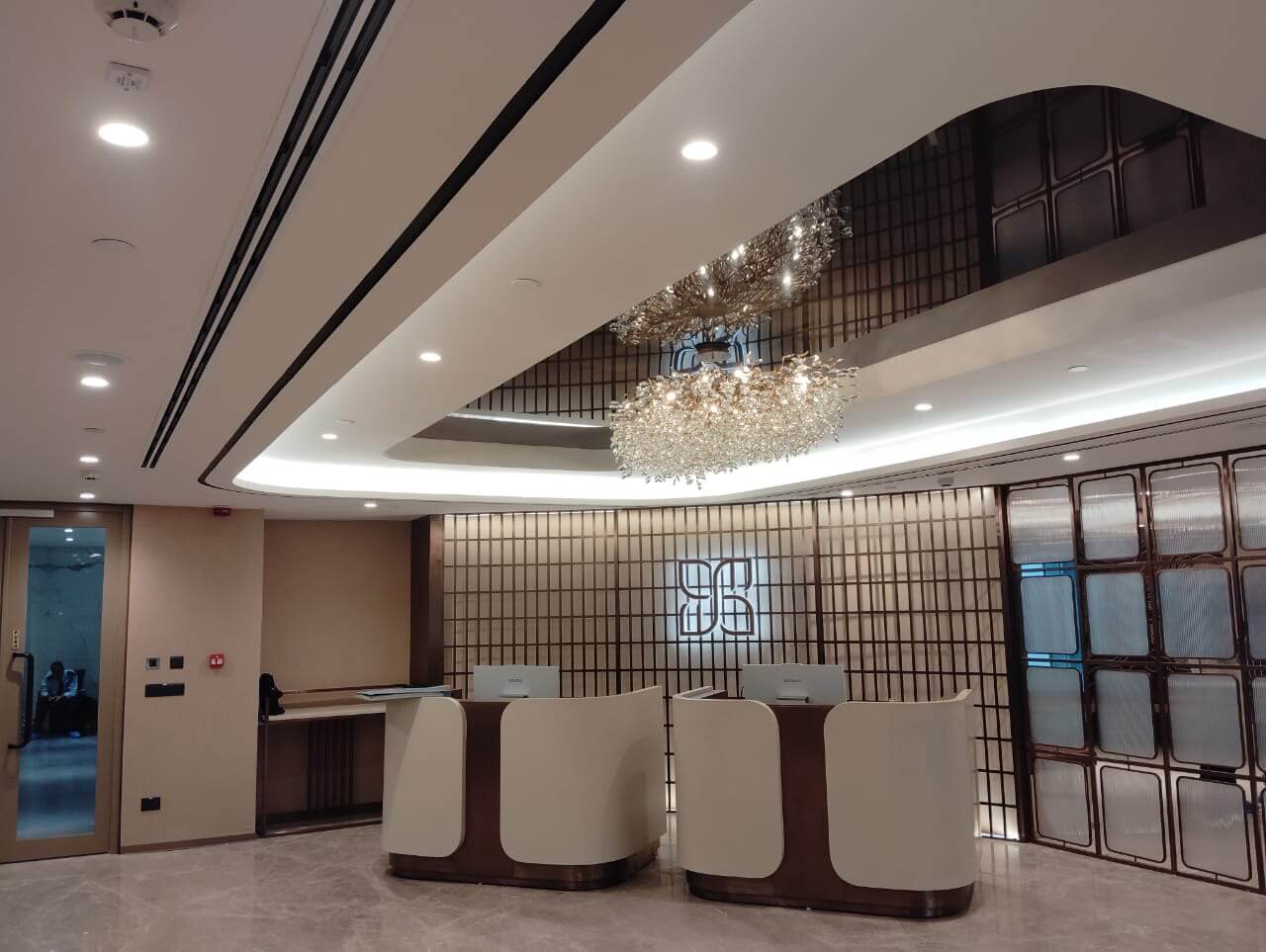
Because two ceilings with identical dimensions can land at very different prices depending on membrane type, lighting system, acoustic performance, geometry, and whatever else is layered on top. A stretch ceiling is a fully integrated architectural system — design, lighting, acoustics, engineering, and precision installation working together — so a single per-sq-ft number can only ever be a rough guide, never a quote.
So What Should You Ask For Instead of a Ballpark?
None of this is complicated — it just can’t be collapsed into a single number without knowing your project. The fastest way to get an accurate figure is to tell us about the room (drawings or a reflected ceiling plan, if you have one), the finish you’re leaning toward, whether you need lighting (and what kind), whether acoustics or a dust barrier matters for the space, and where the site is. With those answers, NEWMAT can put together a quote that reflects your project — not an average of every other project.